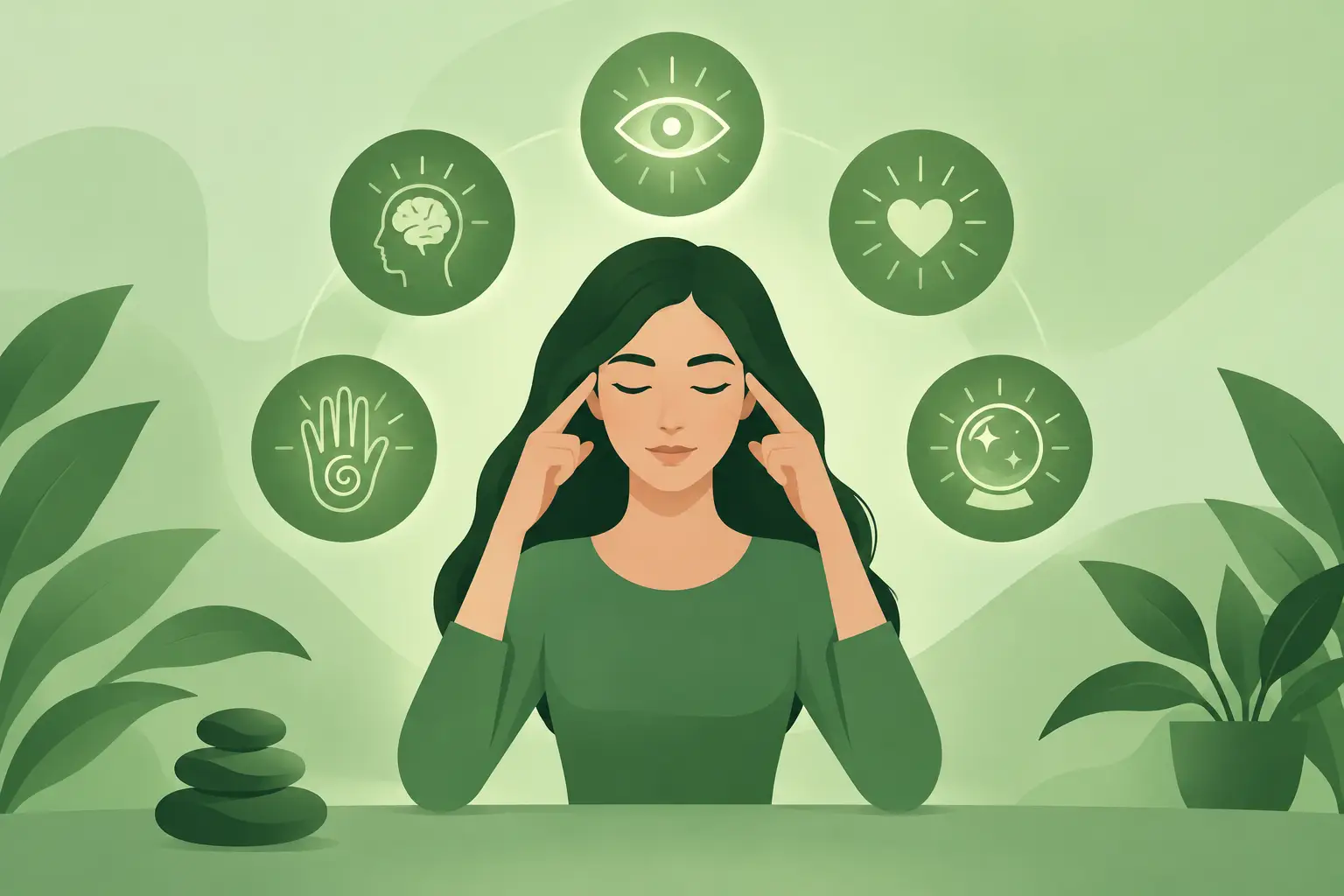
You may have had the experience: you think of someone moments before they call, sense the mood in a room before anyone speaks, or get a quiet inner nudge that later proves meaningful. Then comes the question many spiritual seekers ask: can psychic abilities be trained, or are they something you either have or do not have?
The grounded answer is yes. Intuitive ability can be developed through consistent practice, reflection, and discernment. Some people begin with a stronger natural sensitivity, just as some people naturally pick up music or language more quickly. But sensitivity is not the same as skill. Skill is built by learning how to notice information, interpret it responsibly, and separate a genuine intuitive impression from fear, hope, assumption, or outside influence.
Psychic development is not about performing on demand or forcing dramatic experiences. It is about becoming more aware of the subtle ways you receive information and learning to work with that awareness with clarity and confidence.
Can Psychic Abilities Be Trained? Yes, With Structure
Many people assume psychic ability should feel effortless. That belief creates unnecessary frustration. A beginner may wait for a crystal-clear vision, a voice, or a major prediction, while overlooking the quieter information that is already present: a physical sensation, a sudden image, a word in the mind, or a strong but calm knowing.
Training gives those experiences a framework. Instead of asking, “Was that real?” after every impression, you learn what questions to ask. What did I notice first? What emotion was present? Did the impression arrive calmly or with panic? Is there evidence I can check? Has this type of signal been accurate for me before?
This is why structured learning matters. Random tips can be inspiring, but they rarely teach you how to track progress or correct misunderstandings. A step-by-step approach helps you develop both openness and discipline. You are not trying to believe everything you sense. You are learning to observe, test, and refine.
What You Are Actually Training
Psychic development involves several connected skills. The first is attention. Modern life trains us to move quickly from one demand to the next, which makes it difficult to notice subtle impressions. Quiet practice helps you recognize the information that is already being drowned out by mental noise.
The second is self-awareness. Your intuition does not arrive in a vacuum. Your past experiences, expectations, fears, and desires can all shape what you perceive. Knowing your personal patterns is not a weakness. It is one of the strongest forms of protection and discernment available to any developing practitioner.
The third is interpretation. An image of a closed door may mean boundaries, privacy, an ending, or a literal location. Psychic information is often symbolic and contextual. Learning how to interpret without rushing to certainty is where much of the real work happens.
Finally, you are training ethics. A strong reader knows when to speak, when to ask permission, and when not to make claims that could create fear or replace professional medical, legal, financial, or mental health support. Developing ability and developing responsibility should always go together.
Start With Receptivity, Not Performance
The best early exercises are simple because they remove the pressure to be impressive. Set aside ten quiet minutes with a notebook. Take a few slow breaths, place both feet on the floor, and let your attention settle. Ask yourself one clear question, such as, “What do I need to understand about my energy today?” Then write down the first images, feelings, sensations, words, or memories that arise.
Do not edit while you are receiving. A common beginner habit is dismissing an impression before it has had a chance to develop. Write it down first. Interpretation can come later.
Afterward, review what you recorded. Was there a recurring symbol? Did a body sensation connect to a situation you had been avoiding? Did the message feel calm, direct, and neutral, or urgent and emotionally charged? Over time, this journal becomes evidence of how your own intuitive language works.
Meditation can support this process, but it does not need to be complicated. The purpose is not to empty your mind perfectly. The purpose is to notice thoughts without immediately following them, creating enough inner space for subtler awareness to be recognized.
Practice With Feedback
Feedback is what turns a personal feeling into a trainable skill. Without it, you can easily mistake confidence for accuracy. Choose low-stakes exercises that can be checked afterward.
For example, before opening a message from a friend, write down what emotional tone you sense. Before a planned event, notice the atmosphere you expect and compare it with your actual experience. You can also practice psychometry by holding an object that belongs to someone you know well and recording the impressions that come up before asking for feedback.
Keep the exercise respectful. Do not use intuitive practice to pry into someone’s private life, make accusations, or seek information they have not agreed to share. Consent is not optional just because the practice is spiritual.
When reviewing your results, avoid two extremes. Do not declare yourself inaccurate because one detail was wrong, and do not stretch vague impressions to make every result fit. Look for patterns. Perhaps you accurately sense emotions but struggle with timing. Perhaps images arrive clearly but need more context. Specific feedback reveals where practice is needed.
Learn the Difference Between Intuition and Anxiety
This distinction can change your entire practice. Intuition often feels brief, clear, and quietly persistent. It may not tell you every detail, but it usually leaves room for choice. Anxiety tends to repeat itself, demand immediate action, imagine worst-case scenarios, and grow louder when you try to reassure it.
Of course, people experience these signals differently. The goal is not to create a rigid rule about what intuition must feel like. The goal is to build a record of your own inner responses. When you journal impressions and review outcomes, you start to see which sensations are reliable and which ones are tied to stress, wishful thinking, or old emotional wounds.
Grounding practices are especially useful here. Eat regularly, rest, move your body, spend time outside, and stay connected to ordinary responsibilities. Spiritual development should make you more present in your life, not less able to participate in it. If a practice leaves you consistently distressed, isolated, or unable to function, pause and seek appropriate support.
Why Consistency Matters More Than Intensity
A single powerful experience can inspire you, but regular practice creates dependable skill. Ten minutes of mindful observation several times a week will teach you more than waiting for a rare, dramatic moment.
Think of it like learning tarot. Memorizing card meanings may give you a starting point, but confidence comes from repeated readings, thoughtful reflection, and learning how symbols connect to real situations. Psychic development works similarly. You build a relationship with your senses through use.
A helpful routine may include a short grounding practice, a daily intuitive journal entry, and one feedback-based exercise each week. Add study gradually as your foundation strengthens. Trying to learn every spiritual method at once can create confusion. Focus on one area, such as clairvoyance, clairsentience, energy awareness, or psychic protection, and give yourself time to understand it.
Training With a Teacher or Course
Self-study can be valuable, especially when you are curious and consistent. But it also has limits. It can be hard to know whether you are progressing, interpreting symbols responsibly, or simply collecting information without practicing it.
A quality training program offers sequence, explanation, and a place to ask questions. It should teach practical exercises alongside ethics, grounding, energetic boundaries, and interpretation. It should not pressure you to have a particular type of experience or promise that you will become identical to someone else.
For students who want a clear path, School of Holistic Mastery approaches psychic development as a learnable practice, with structured lessons designed to help beginners move beyond vague advice and build usable skills. Certification can also be meaningful for those planning to include intuitive work within a professional holistic practice, but the credential should rest on genuine understanding and responsible application.
Give Your Ability Room to Develop
Psychic ability is not a test you pass in a weekend. It is a practice of attention, honesty, and trust that becomes more refined over time. Some weeks your impressions may feel strong; other weeks, quiet. That does not mean you have lost your connection. It usually means you are human, living a full life, and learning how to return to your center.
Begin where you are. Record what you notice. Ask for feedback. Stay grounded. Let your confidence grow from experience rather than pressure. The most meaningful intuitive development is not about proving you are special. It is about becoming more present, discerning, and able to use your awareness with care.