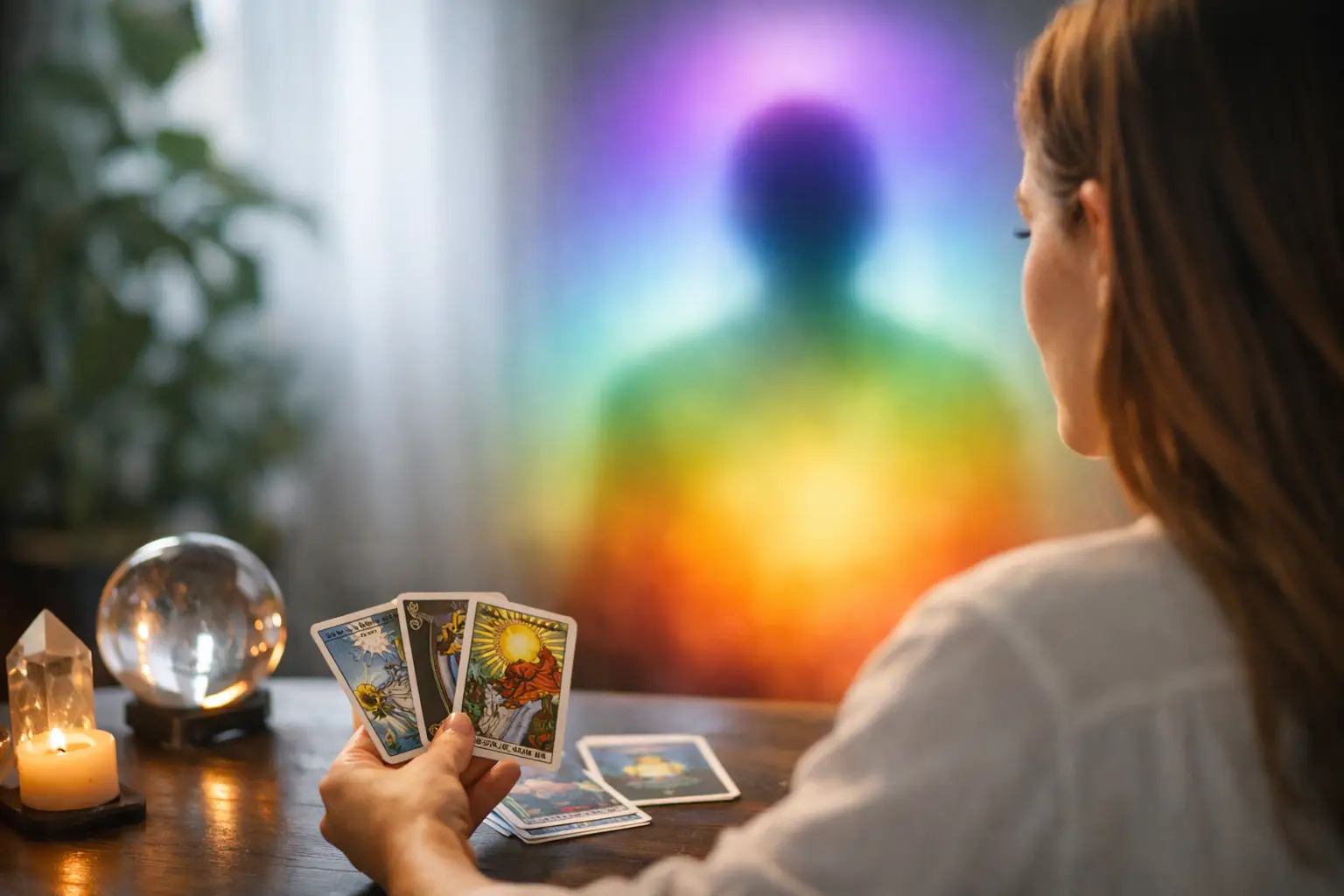
If you have ever looked at an aura chart and thought, That sounds interesting, but how do I actually do it, you are not alone. Learning how to read aura colors is one of those spiritual skills that gets talked about constantly and explained poorly. The truth is, aura reading is not about memorizing a pretty list of colors and pretending every yellow means the same thing. It is about observation, energetic sensitivity, and context.
That is good news for beginners. You do not need to be born psychic, and you do not need to force a mystical experience. You need a step-by-step way to notice energy with clarity and confidence, then interpret what you are seeing without turning every impression into a dramatic prediction.
What an aura actually is
An aura is commonly understood as the energetic field that surrounds a person, animal, plant, or space. In spiritual practice, it is often read as a reflection of emotional states, mental patterns, spiritual development, and overall energetic condition. Some people perceive auras visually as color around the body. Others sense them intuitively, feel them physically, or receive an inner impression of color without seeing anything with their eyes.
This matters because one of the biggest blocks in aura work is assuming there is only one correct way to read. There is not. If you are waiting to see a glowing rainbow around someone before you trust yourself, you may miss the ways your intuition is already communicating.
How to read aura colors without overcomplicating it
The most grounded approach is to treat aura reading as a blend of psychic perception and interpretation. First, you notice. Then, you assess. Then, you confirm.
Start by choosing a calm environment with neutral lighting. A plain white or light-colored background can help if you are practicing visual aura reading. Ask the person to stand or sit comfortably and soften your gaze around the edges of their body rather than staring directly at them. Many beginners do better when they look slightly past the shoulders or above the head.
At first, you may notice a faint outline, a haze, heat-like movement, or subtle color impressions. Keep it simple. Do not strain. Aura reading gets weaker when you try to force it.
If visual perception is not happening clearly, shift to intuitive reading. Sit quietly, tune into the person, and ask yourself what color comes to mind first. Then ask where that color feels strongest and what emotional or energetic tone comes with it. Often the meaning is not in the color alone but in the full impression.
The real meaning of aura colors
Color meanings are useful, but they are not fixed rules. A bright, clear blue and a dull, heavy blue do not communicate the same thing. A color near the head may suggest something different than the same color near the heart or lower body. This is where beginners need both structure and flexibility.
Red aura
Red often relates to physical energy, survival, action, drive, passion, and grounding. In a balanced state, it can show courage, vitality, and strong life force. If it feels harsh or muddy, it may point to anger, stress, impulsiveness, or fear-based reactivity.
Orange aura
Orange is often connected to creativity, pleasure, emotional expression, sensuality, and personal power. A healthy orange can suggest enthusiasm, magnetism, and momentum. If it feels unstable, it may reflect emotional drama, dependency, or difficulty regulating desires.
Yellow aura
Yellow usually points to the mind, confidence, learning, optimism, and self-expression. It often appears strongly around people who are developing their voice or stepping into personal clarity. If the energy feels brittle or scattered, yellow can also indicate overthinking, anxiety, or performing confidence instead of feeling it.
Green aura
Green is commonly linked to healing, growth, compassion, and the heart center. It can show someone who is expanding, recalibrating, or naturally supportive of others. But context matters. Green can also reflect jealousy, resentment, or imbalance if the energy feels constricted rather than open.
Blue aura
Blue is associated with communication, truth, calm, intuition, and emotional depth. Clear blue energy often appears in people who are learning to speak honestly and listen deeply. If the tone feels muted, it may suggest self-silencing, grief, or difficulty expressing what is real.
Purple or indigo aura
Purple and indigo are often linked to psychic sensitivity, spiritual awareness, imagination, and inner knowing. These colors can show a person who is deeply intuitive or drawn to spiritual study. Still, not every purple aura means enlightenment. Sometimes it points to someone who is energetically open but ungrounded.
Pink aura
Pink often carries themes of love, tenderness, compassion, and emotional softness. It can show sweetness, romance, or heart-led connection. In some cases, it may also suggest idealism or a tendency to avoid harder truths in order to keep the peace.
White aura
White is often interpreted as purity, spiritual protection, high-frequency energy, or a strong connection to healing. It can feel very expansive and light. At the same time, some people label anything they cannot identify as white, so discernment matters here.
Gray, brown, or black tones
These colors tend to concern beginners, but they should not trigger fear. Heavier tones may reflect fatigue, emotional suppression, confusion, energetic congestion, or unresolved stress. They do not automatically mean something dark or dangerous. Often, they signal an area that needs support, grounding, or healing.
How to read aura colors accurately
Accuracy comes from layering your observations instead of making instant declarations. If you notice green, ask yourself what kind of green it is. Is it bright and alive, or flat and heavy? Is it close to the chest, spread evenly, or flickering in one area? Does your body feel calm when you tune in, or tight and uneasy?
This is where aura reading becomes a real skill rather than guesswork. The color gives you a doorway. The quality, placement, and feeling tell you how to interpret it.
A red aura around an athlete in motion may signal healthy vitality. That same red around someone under extreme pressure may reflect burnout and agitation. A blue aura can suggest clear communication, but if the person is visibly withdrawn and the blue feels dim, the message may be emotional shutdown rather than calm wisdom.
Common mistakes beginners make
The first mistake is relying on rigid color dictionaries. They can help you start, but they should not replace your perception. Spiritual development gets stronger when you learn the principles behind the meanings.
The second mistake is ignoring your strongest intuitive channel. Some people are visual. Others are clairsentient and feel energy in the body. Others simply know. If you keep trying to read like somebody else, your progress slows down.
The third mistake is treating an aura as a permanent identity. Auras shift. Mood, stress, healing work, environment, and spiritual practice all affect what is present. You are reading current energy, not stamping a lifelong label on someone.
Practice methods that actually help
If you want to improve, consistency matters more than intensity. Practice with the same method several times before changing techniques. Spend a few minutes reading your own energy before trying to interpret others. Journal what you notice, especially repeated colors and how they match your emotional or energetic state.
It also helps to validate your readings. If you sense yellow and feel mental busyness, ask the person if they have been studying, planning, or overthinking lately. You are not fishing for approval. You are training your interpretation against real-life feedback.
Another useful step is grounding before and after practice. Aura reading is easier when your own energy is centered. A few deep breaths, both feet on the floor, and a clear intention to perceive truth without projection can make a noticeable difference.
When aura colors seem mixed or hard to identify
That is normal. Most auras are not one flat color. You may pick up layers, movement, or combinations that change as you observe. Mixed colors can reflect more than one active theme. They can also show that a person is in transition.
If the reading feels unclear, do not invent certainty. A grounded reader can say, I am seeing a blend of blue and green, with stronger activity around communication and healing, but the energy feels in flux. That is far more useful than pretending every impression is crystal clear.
For many students, this is the turning point. Aura reading becomes much more accurate when you stop trying to sound impressive and start focusing on what is actually there.
Why learning how to read aura colors matters
Aura reading is not just a novelty skill. It can sharpen intuition, improve energetic awareness, and help you understand yourself and others with more depth. For spiritual practitioners, it can also support client work in a practical way when it is done ethically and with discernment.
At School of Holistic Mastery, we believe spiritual skills should be taught step-by-step, not wrapped in confusion. Aura work is powerful, but it becomes truly useful when you can explain what you are sensing, trust your method, and apply it in real life.
The more you practice, the less you need to chase dramatic experiences. You start noticing the quieter signs, and that is often where the clearest reading begins.