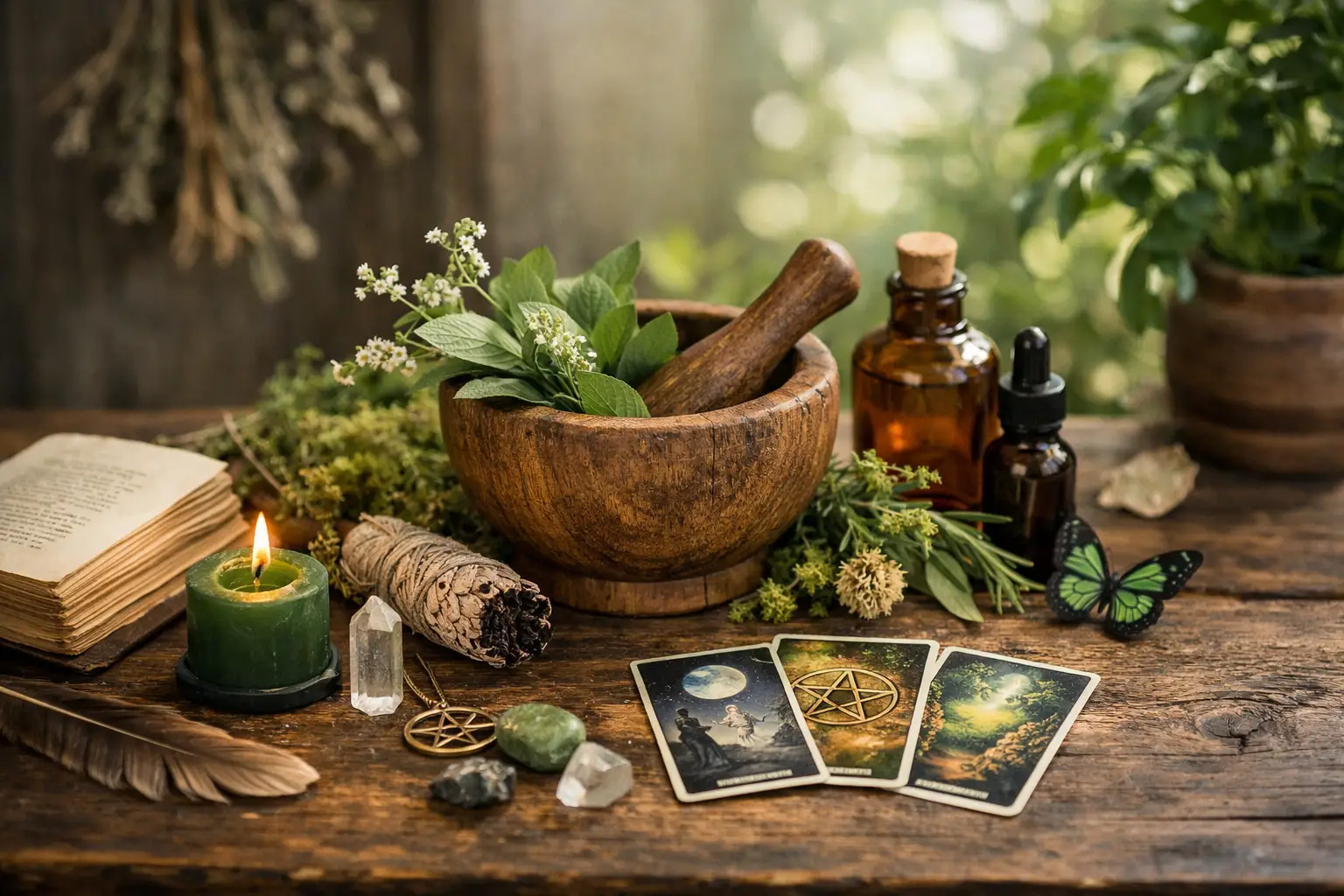
If you have ever stood in a garden, held a handful of rosemary, and felt like nature was speaking a language you almost understood, green witchcraft for beginners is often where that feeling starts to make sense. Not as fantasy, and not as something reserved for a gifted few, but as a grounded spiritual practice built on relationship – with plants, seasons, land, energy, and your own intuition.
That matters because a lot of beginners get pulled in two unhelpful directions. One is vague mysticism that sounds beautiful but teaches nothing. The other is pressure to perform complicated rituals before you understand what you are doing. Green witchcraft offers a steadier path. It is practical, rooted, and deeply teachable when approached step by step.
What green witchcraft for beginners really means
At its core, green witchcraft is a nature-centered magical practice. It works with the energy of herbs, flowers, trees, soil, stones, water, moon cycles, and seasonal rhythms. The focus is not on collecting the most tools or copying someone else’s altar setup. The focus is learning how natural energies interact, how intention directs them, and how to practice with respect.
For beginners, this is good news. You do not need to live in a forest, grow all your own herbs, or memorize endless correspondences to begin. You need observation, consistency, and a willingness to learn what each plant or natural element means in practice.
Green witchcraft is often confused with herbalism or gardening alone, but it is not exactly the same. Herbalism focuses on the medicinal properties of plants. Gardening focuses on growing them. Green witchcraft can include both, but its purpose is spiritual and energetic as well. A cup of mint tea can be refreshing on a physical level, but in green witchcraft it can also be used intentionally for clarity, cleansing, or focus.
The foundation of green witchcraft
A strong beginner practice starts with principles, not props. That is what keeps your work clear and effective.
The first principle is relationship. Green witchcraft is not about using nature like a vending machine for spells. It is about building awareness of the living world around you. That might mean noticing how you feel in different seasons, learning the personality of common herbs, or understanding the energy of your local landscape.
The second principle is intention. In simple terms, intention is the direction you give your energy. A candle, a jar, or a bundle of herbs is not magic by itself. It becomes part of a magical act when your intention is clear and your actions support it. Beginners often overcomplicate this. You do not need dramatic words. You need honesty and focus.
The third principle is correspondence. This means understanding which natural items are traditionally or intuitively connected with certain purposes. Basil may be used for prosperity, lavender for peace, rosemary for protection and memory. Correspondences are helpful, but they are not rigid laws. Context matters. Your own experience with a plant matters too.
The fourth principle is ethics. This is where real maturity enters the practice. Ethical green witchcraft means foraging responsibly, avoiding harmful plants unless you know exactly how to handle them, respecting closed traditions, and thinking carefully about the impact of your magical work. Just because you can do something does not mean you should.
Tools you actually need at the beginning
Very few, honestly. That surprises people because witchcraft online is often presented as a shopping list. In reality, green witchcraft begins well before you own a polished altar table or a cabinet full of jars.
A beginner can do meaningful work with a journal, a candle, a bowl, clean water, and a few common herbs such as rosemary, mint, basil, chamomile, or lavender. If you like structure, add a small pair of scissors for plant work and a cloth to create a dedicated practice space. That is enough.
What matters more than quantity is familiarity. It is better to know five herbs well than own thirty you never use with confidence. It is better to understand one cleansing ritual than copy ten from social media without knowing why they work.
If you do build a tool collection over time, do it with intention. Ask what each item is for, how it supports your practice, and whether you will genuinely use it. Spiritual growth gets clearer when your tools match your level of understanding.
Easy green witchcraft practices for beginners
The most effective beginner practices are simple enough to repeat. Repetition builds sensitivity. Sensitivity builds confidence.
Start with plant observation
Choose one plant or herb and study it for a week. Notice its scent, shape, texture, color, growth pattern, and how your energy feels around it. Look at both traditional correspondences and your own impressions. This trains your magical awareness in a real, grounded way.
Make tea with intention
Herbal tea is one of the simplest forms of green magic. As you prepare it, focus clearly on the quality you want to invite – calm, focus, comfort, self-trust. Speak that intention quietly if you want. Then drink slowly and pay attention. This is not about pretending a beverage will fix your life. It is about aligning action, energy, and awareness.
Create a seasonal ritual
Green witchcraft is closely tied to cycles. At the start of a new season, light a candle, place a few natural items on a cloth, and reflect on what that season asks of you. Spring may call for growth, summer for vitality, fall for release, winter for rest. Keep it simple and sincere.
Try a home blessing with herbs
A basic home blessing can be done with rosemary in water, a bowl of salt, or a small bundle of kitchen herbs if smoke is safe in your space. Move through your home with the intention of clearing heaviness and welcoming peace. Again, the power comes from focused practice, not theatrics.
Common mistakes in green witchcraft for beginners
One common mistake is rushing into spellwork before building foundational understanding. Spells are not bad for beginners, but they work better when you know what each ingredient is doing and why. Otherwise, the process becomes mechanical.
Another mistake is treating every plant as safe. Natural does not automatically mean harmless. Some herbs are toxic to ingest, unsafe for pets, irritating to skin, or risky during pregnancy. Green witchcraft should always include practical caution. Spiritual practice is stronger when it is informed.
A third mistake is expecting instant certainty. Many beginners worry they are doing it wrong if they do not feel dramatic energy right away. In truth, subtle awareness often develops first. You may notice calm, clarity, vivid dreams, or a stronger response to seasonal shifts before anything else. That counts.
There is also the issue of imitation. It helps to learn from teachers, but copying someone else’s exact rituals without understanding the underlying principles creates dependency. Real learning means you begin to recognize patterns and make wise choices on your own.
How to build confidence with clarity and confidence
Confidence in witchcraft does not come from looking experienced. It comes from practice you can explain. If you cannot say why you are using rosemary, water, moonlight, or a certain ritual step, pause there. Learn the reason. That is how confusion starts to clear.
This is why structured education helps so many beginners. When spiritual topics are taught step by step, they stop feeling random. You understand the purpose behind the practice, the safety considerations, and how to apply what you learn in real life. For people who want not only personal growth but usable skills, that kind of grounded teaching makes a real difference.
A journal will help more than you think. Record what you used, what your intention was, how the ritual felt, and what happened afterward. Over time, patterns emerge. You learn which herbs you connect with, which rituals feel natural, and where you need more study.
Green witchcraft as a path, not a performance
The strongest green witches are rarely the loudest. They are the ones who understand relationship, rhythm, and respect. They know that nature is not a backdrop for spiritual aesthetics. It is the teacher.
If you are beginning, give yourself permission to start small. Learn one herb. Mark one moon phase. Bless one cup of tea. Cleanse one room. Notice what changes when your spiritual practice becomes consistent instead of scattered.
That is where real magic starts – not in doing more, but in understanding more. And once you build that foundation, your practice can grow with clarity, confidence, and a much deeper sense of trust in your own connection to the natural world.