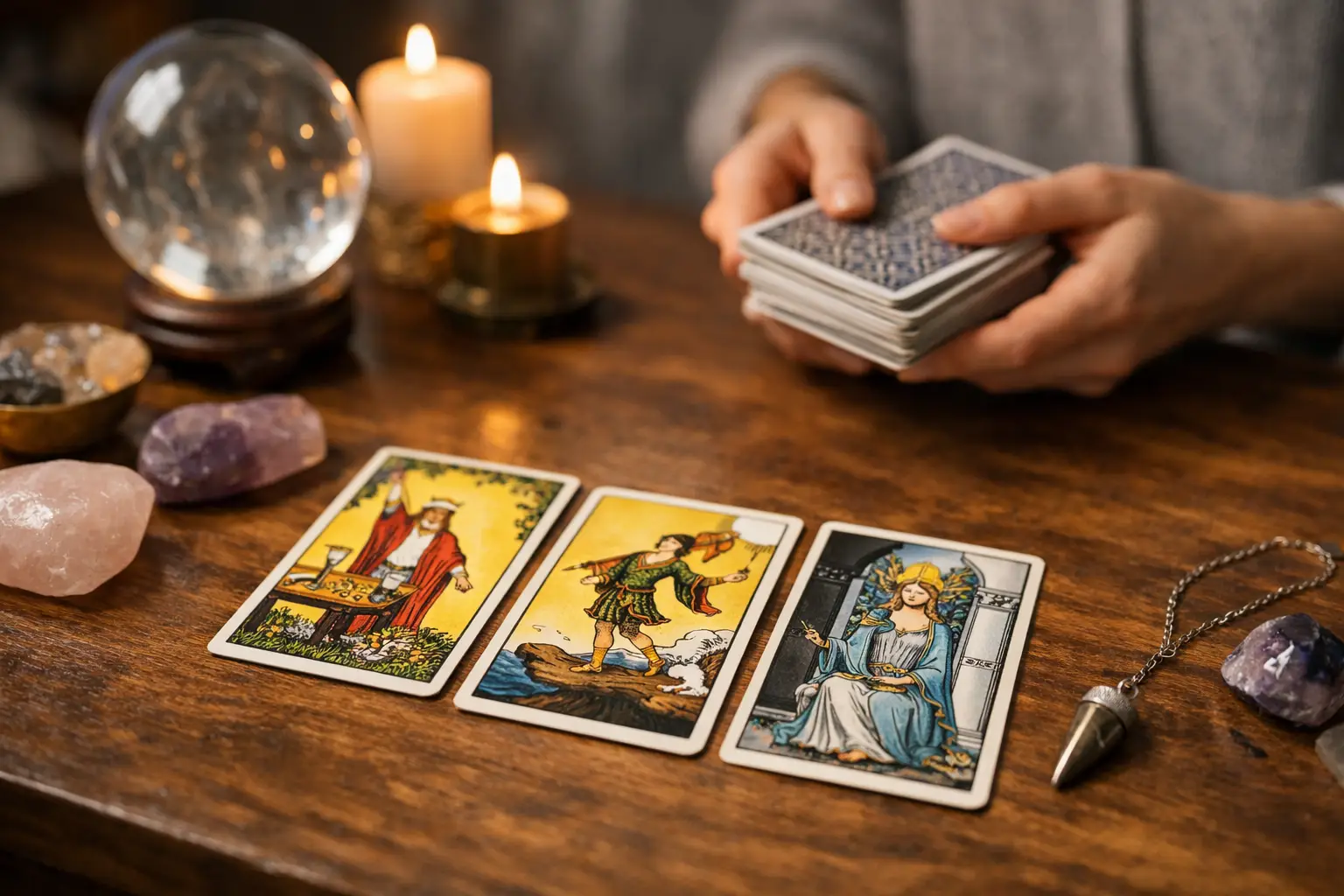
You do not need psychic perfection to start reading tarot. What you do need is a clear framework. That is why learning tarot cards for beginners with meanings works best when you stop trying to memorize 78 isolated definitions and start understanding how the deck is built.
Tarot is a system. Once you see the structure, the cards stop feeling random, and your readings become far more accurate. For beginners, that shift matters. It replaces guesswork with real understanding and helps you read with clarity and confidence instead of depending on a booklet every time a card appears.
Why tarot feels confusing at first
Most beginners run into the same problem. They buy a beautiful deck, pull a few cards, and then realize every source explains the same card in a slightly different way. One teacher says The Tower means chaos. Another says liberation. Another says spiritual awakening. All of those can be true, which is exactly why tarot can feel slippery when you are new.
The answer is not to find one magical keyword and force every reading to fit it. The answer is to learn the core meaning of each card, then understand how that meaning changes based on context, position, surrounding cards, and the question being asked.
In other words, tarot is not vague. It is layered. If you learn the layers in the right order, it becomes much easier.
Tarot cards for beginners with meanings: start with the deck structure
A standard tarot deck has 78 cards split into two parts: the Major Arcana and the Minor Arcana. If you understand what each section is designed to show, reading gets simpler fast.

The Major Arcana
The 22 Major Arcana cards point to bigger life lessons, spiritual themes, turning points, and soul-level growth. These are the cards people usually recognize first, like The Fool, The Lovers, Death, and The World.
For a beginner, the easiest way to read them is this: Major Arcana cards signal something significant. They often describe deeper transformation, major choices, karmic lessons, or a chapter that will shape what comes next.
The Fool is the beginning, trust, and stepping into the unknown. The Magician is focused action and personal power. The High Priestess points to intuition, inner knowing, and what is not yet fully revealed. Death rarely means physical death in a reading. More often, it means an ending that makes renewal possible. The World points to completion, integration, and reaching a meaningful milestone.
If several Major Arcana cards appear in one reading, pay attention. The situation likely carries more weight than a passing mood or everyday issue.
The Minor Arcana
The 56 Minor Arcana cards deal with daily life, practical experiences, emotions, thoughts, conflict, relationships, work, and momentum. They are divided into four suits: Cups, Wands, Swords, and Pentacles.
Cups relate to emotions, relationships, intuition, and the inner world. If you pull the Ace of Cups, think emotional beginnings, openness, and connection. If you pull the Five of Cups, think disappointment, grief, or focusing too much on what feels lost.
Wands relate to passion, creativity, motivation, growth, and action. The Ace of Wands often signals a spark, a new idea, or inspired energy. The Ten of Wands can show overload, responsibility, or carrying too much alone.
Swords relate to thoughts, communication, decisions, truth, and mental tension. The Ace of Swords brings clarity and breakthrough. The Nine of Swords often points to anxiety, overthinking, or mental pressure.
Pentacles relate to work, money, health, stability, and the material world. The Ace of Pentacles can mean a practical opportunity, grounded beginnings, or financial potential. The Five of Pentacles may reflect hardship, insecurity, or feeling unsupported.

Ready to Learn Tarot Without Endless Memorization?
The Intuitive Tarot Masterclass shows you how to understand the cards through intuition, symbolism, and practical experience. Discover a clear, beginner-friendly system for reading Tarot with confidence—whether you’re reading for yourself or others.
Trusted by 24,000+ spiritual practitioners worldwide.
One-Time Payment • Self-Paced • Certificate Included
Court cards without the headache
Court cards are where many beginners freeze. Pages, Knights, Queens, and Kings can represent people, but not always. They can also describe stages of growth, personality traits, or how energy is being expressed.
Pages often show learning, beginnings, curiosity, and messages. Knights show movement, pursuit, and action. Queens tend to express inward mastery, emotional intelligence, or mature embodiment of a suit. Kings often show outward leadership, control, direction, and authority.
If the Page of Cups appears, it might represent a sensitive person, a heartfelt message, or the early stages of emotional openness. If the King of Pentacles appears, it could point to a reliable person, a stable business mindset, or practical mastery.
It depends on the question. That is not tarot being unclear. That is tarot responding to context.
How to read card meanings without memorizing a script
The fastest way to improve is to stop treating tarot like a vocabulary test. Instead, learn to combine structure with intuition.
Start with the suit or card family. Ask whether the card belongs to emotions, action, thought, material life, or a major spiritual lesson. Then notice the number. Lower numbers often show beginnings or early development. Middle numbers may reflect growth, challenge, or adjustment. Tens often point to completion, overload, or the end of a cycle.
Then look at the imagery. Is the card calm or intense? Open or closed? Balanced or chaotic? Tarot speaks through symbols, and the visual language matters. Finally, connect the card to the actual question. A card about emotional withdrawal will mean something different in a love reading than it will in a career reading.
This is why rigid memorization often slows beginners down. You need anchor meanings, yes. But you also need room to interpret.
Tarot cards for beginners with meanings in real readings
A simple three-card spread is enough to build confidence. Try reading for past, present, and next step, or situation, challenge, and guidance. These layouts give structure without overwhelming you.
Imagine you ask about starting a new spiritual business and pull The Magician, Eight of Pentacles, and Three of Swords. A beginner might panic at the last card. But read in context, the message could be clear: you have the tools to begin, steady skill-building is required, and fear of disappointment or old wounds around visibility need healing.
Same cards, different question, different emphasis. If the reading were about a relationship, The Magician could point to strong intent, Eight of Pentacles to effort, and Three of Swords to pain that needs honesty rather than avoidance.
Tarot works best when you let the cards speak to the situation in front of you, not when you force a canned meaning onto them.
Common beginner mistakes and what to do instead
One common mistake is pulling too many cards. When you are still learning, more cards usually create more confusion, not more truth. Keep it simple enough that you can actually follow the thread.
Another mistake is reading while emotionally flooded. If you are desperate for a specific answer, your interpretation can get distorted. Pause, ground yourself, and come back when you can listen instead of chase reassurance.
A third mistake is assuming scary cards mean disaster. The Devil can point to attachment, temptation, or unhealthy patterns. The Tower can show disruption, but also necessary truth. Ten of Swords can reflect a painful ending, but endings clear space. Tarot is honest, not cruel.
This is where structured learning helps. When you understand why a card means what it means, fear drops away. That is one reason many beginners do better with step-by-step training rather than piecing together random interpretations from social media.
How to build confidence with tarot
Practice with one card a day. Pull a card in the morning, write down its traditional meaning, then reflect on how that energy shows up in real life. Over time, the cards stop being abstract and start becoming familiar.
Journal your readings. This matters more than most beginners realize. When you track what you pulled, what you thought it meant, and what actually unfolded, your interpretation sharpens quickly.
It also helps to read for simple, grounded questions first. Ask what energy surrounds your work, what lesson is active for you, or what support you need this week. Those questions train your reading skill better than asking whether every text message means fate.
If you want to read professionally one day, build your foundation properly now. Confidence does not come from owning more decks. It comes from understanding the system, practicing consistently, and learning in a way that turns intuition into a usable skill. That is exactly why schools like School of Holistic Mastery focus on teaching spiritual tools in a structured, beginner-friendly way.
Tarot is not reserved for the gifted few. It is a language, and languages become easier when someone explains the grammar. Start there, stay consistent, and let meaning grow through practice. The cards will meet you halfway.
You must be logged in to post a comment.